
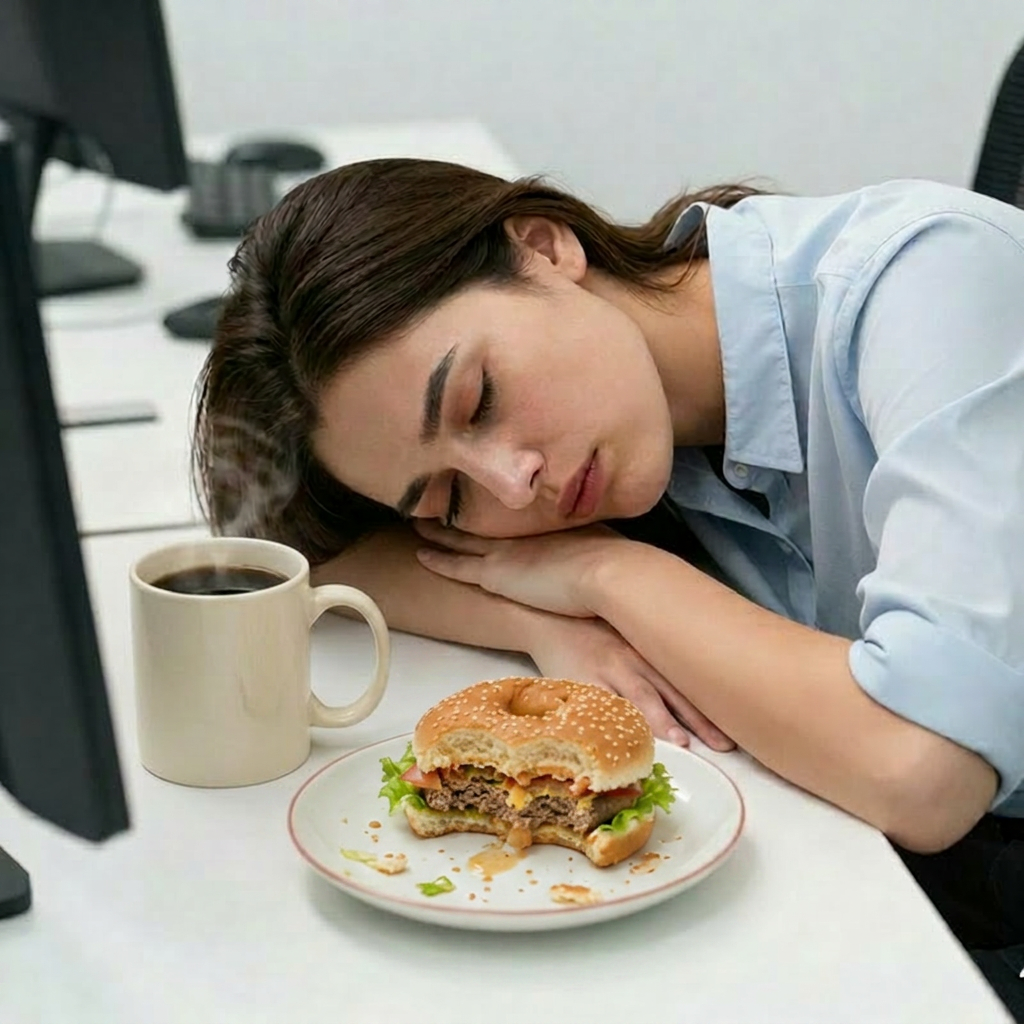
Understanding why afternoons feel harder-and what your hormones have to do with it.
Most people, male and female know that feeling of the “Post-Lunch Slump”, but women going through the menopause feel this more strongly. Why is this? Corporate wellbeing programmes can educate and can help companies support their workforce effectively during peri and post menopause. During this time, shifting levels of oestrogen, progesterone, and testosterone change how your body regulates blood sugar, energy, and stress hormones. This makes you more vulnerable to a cortisol spike after lunch — which can trigger the classic afternoon crash: fatigue, fogginess, irritability, and a sudden feeling of a need to lie down.
A little more detail on the topic!
Oestrogen helps keep blood sugar stable by improving insulin sensitivity. As levels fluctuate and decline during perimenopause: Blood sugar rises more sharply after meals and then drops more dramatically afterwards. This will make you feel sleepier or foggier in the early afternoon. The same lunch you’ve eaten for years can suddenly leave you exhausted.
Progesterone has a calming, stabilising effect on the nervous system. When it drops, the stress response becomes more reactive, Cortisol spikes more readily and you feel more “wired but tired”. The natural circadian dip between 1–3pm with this added cortisol and makes the slump more intense.
After lunch, your blood sugar rises, then falls. In menopause, fall is often steeper. When blood sugar drops quickly, your body releases cortisol to bring it back up.
This cortisol surge can cause: – Sudden fatigue, brain fog, anxiety or irritability, cravings for sugar or caffeine and a real sense of overwhelm, causing a hormonal chain reaction, not just tiredness.
Why cortisol feels different in midlife
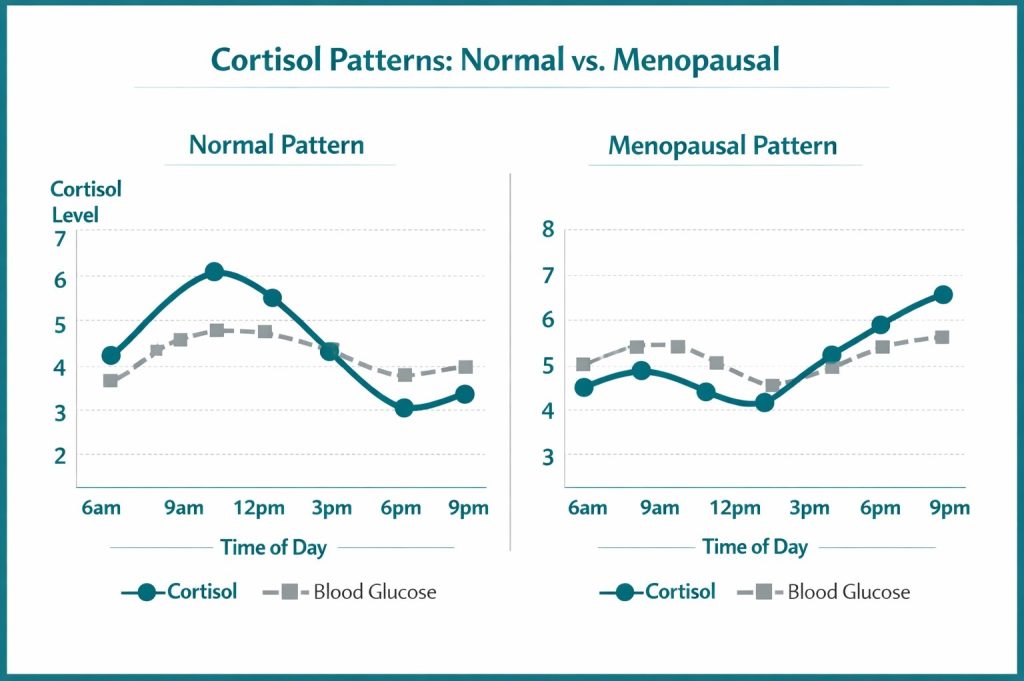
We often hear people talk about Cortisol, but why does it have such an impact?
As shown in the graphs the normal (diurnal) cortisol curve is flattened in the menopause pattern.
Healthy cortisol follows a rhythm: high in the morning, gently falling through the day. During menopause, this curve often flattens, meaning you don’t get the same morning energy, you’re more sensitive to stressors and the afternoon cortisol spikes feel more dramatic. This is why the post lunch slump can feel like hitting a wall.
The brain becomes more sensitive to stress signals.
Declining oestrogen affects the amygdala and hippocampus — areas involved in emotional regulation and memory. As a result, stress feels bigger, fatigue feels heavier and concentration feels harder. It’s physiology, not a weakness.
A couple of tips to help reduce the post lunch slump.
Avoid: Low protein high starchy carbohydrate meals cause faster blood sugar crashes. Eating on the go increases stress and cortisol release. Low quality sleep raises cortisol baseline levels. High intensity exercise at midday can spike cortisol at the exact time your body is trying to wind down. Caffeine after 1pm increases cortisol and can worsen the slump.
A Hormone friendly lunch break-Yes do take a break!
• Eat more protein and less starchy carbohydrates.
Choose slow-release carbohydrates to reduce the sugar hit!
Add some colour to your lunch and healthy fats. This stabilises blood sugar and reduces cortisol spikes.
• Add a 10-minute walk (outside if possible) AFTER eating.This is one of the most effective ways to flatten the post meal glucose curve.
• Utilise the “cortisol trio”: – Stress levelling breathwork, hydration and light movement (walking, Pilates, resistance training or just movement aiding mobility). These three together lower cortisol within minutes.
The bigger picture: your body is recalibrating.
The post lunch slump isn’t a sign of decline — it’s a sign of transition. Your endocrine system is renegotiating how it manages energy, stress, and metabolism. Cortisol becomes louder because oestrogen and progesterone become quieter.
There is so much more to Cortisol and how it has a negative impact on our lives if we are “out of normal pattern”. Look out for future blogs from Pillar Point Menopause Coaching on Cortisol topics.
Why Corporate Awareness Matters
Businesses should understand that depleting hormones changes how cortisol affects the normal post lunch slump. It is more pronounced! Businesses must incorporate this into their menopause support strategies. With the 2027 UK menopause legislative requirements approaching, companies need to move beyond basic symptom management.
Providing education on the issue of post lunch slump and other cortisol related issues, offering pathways for lifestyle change. A proactive corporate wellness programme empowers female employees to take charge of their cortisol regulation during the menopause transition.
If you are planning your menopause policy, Pillar Point Menopause Coaching can help you build an intelligent, evidence-based framework for your organisation.