
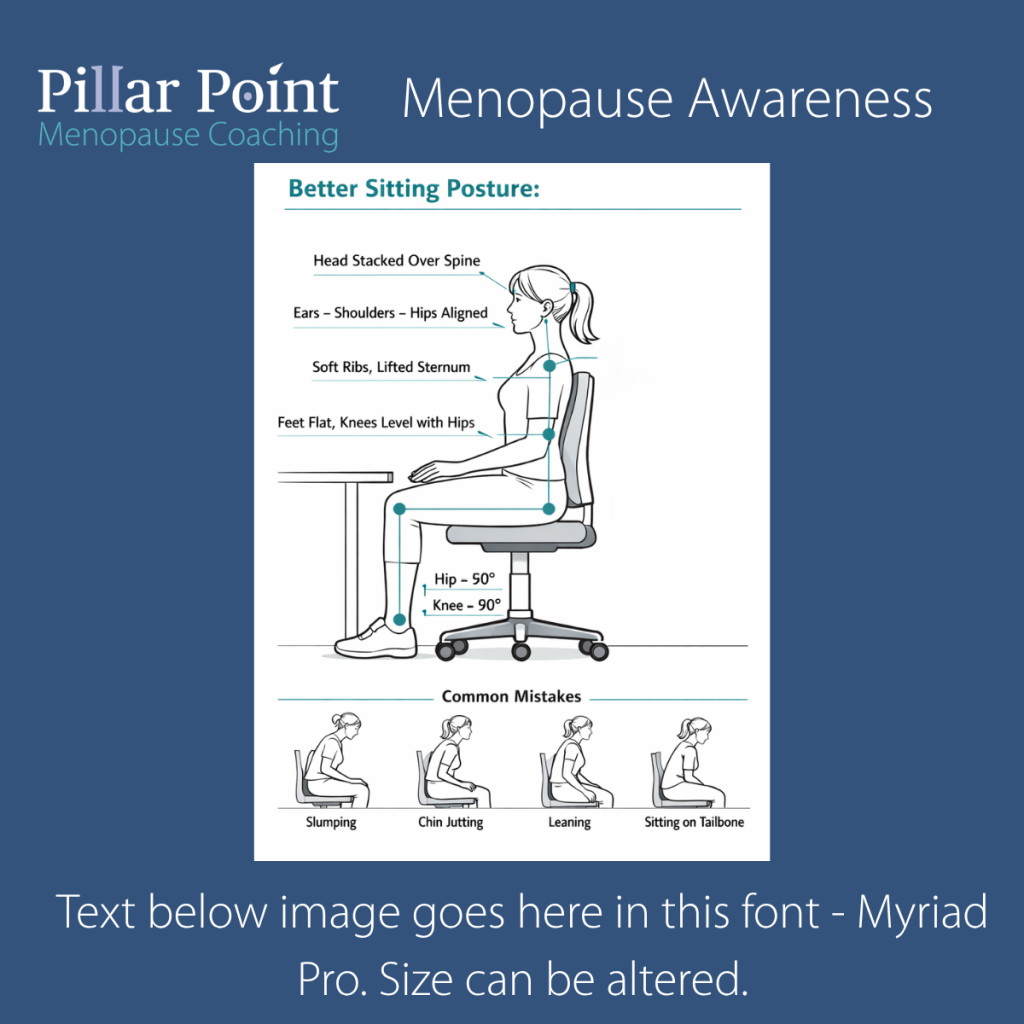
Sitting postures are important no matter our age, but it is particularly important once our hormones fluctuate and decline during the menopausal transition, but why is this?
1. Bone density declines: Sitting loads the spine more heavily
As we age everyone (men and women) experience bone density decrease. Reduced oestrogen in women accelerates bone loss and increases the risk of osteoporosis, making bones weak and increases the risk of breaking bones. When this affects the spine, the vertebrae become more fragile and prone to compression.
Poor sitting posture (e.g. Slumping, posterior pelvic tilt and forward head position) increases compressive forces on weakened vertebrae. This raises the risk of: Kyphotic changes (Dowager’s Hump) to the upper back, vertebral compression fractures and height loss.
2. Muscle mass decreases (sarcopenia): Posture becomes harder to maintain
Menopause reduces muscle tone throughout the body due to the depletion of oestrogen. Oestrogen and other hormones (including testosterone and growth hormones) support muscle health. With depletion of oestrogen and other hormones the muscle tone is lost. Sitting tall requires muscles to be stable and strong especially in the core, back extensors, and hip stabilisers. When these muscles weaken, women compensate with a forward head posture, rounded shoulders, and muscles of the upper back and neck working hard to keep the head upright, whilst simultaneously, the muscles at the front of the neck and upper chest become tighter. This in turn causes the ribcage to collapse, meaning that breathing becomes harder. The lower back then compensates for the upper back, rounding into a posterior pelvic tilt causing the person to sit on the back of the pelvis in a “slumped” position. This now puts increased pressure through non-stacked lumbar vertebrae.
3. Painful stiff joints.
Lower hormone levels affect joint lubrication and disc hydration. Sitting for long periods, especially in a poor posture, increases stiffness in the spine and hips. Movement helps to keep these area’s lubricated, therefore joint stiffness is often felt more first thing in the morning and after sitting. This is exacerbated by poor posture when sitting.
4 Pelvic Floor changes and poor seated posture
The declining oestrogen affects pelvic tissues, increasing the likelihood of stress incontinence, urge incontinence and pelvic organ prolapse (POPs). Poor posture with increased posterior pelvic tilt and collapsed ribcage increases intra-abdominal pressure, in turn this increases the pressure applied to the pelvic floor when we sneeze, cough, jump.
Posture improvements: Sitting Well During Menopause
1. Sit on your sit bones (the bony points under your pelvis). This immediately lifts the spine and reduces pelvic floor pressure.
2. Keep your rib cage stacked over your pelvis, avoid leaning back or collapsing forward. This allows the ribcage to open and breathing to be easier.
3. Maintain a gentle lumbar curve, not exaggerated, known as neutral.
4. Keep your head aligned over your ribcage and shoulders (imagine you are listening to a quiet conversation going on behind you).
5. Position hips slightly higher than knees to reduce lumbar strain and helps maintain pelvic neutrality. Ensure your feet are flat on the floor and your chair is adjusted to the correct height and use a footrest if required to ensure the knees are not too low.
6. Use supports when needed. Use a small lumbar roll or firm chair, this can help maintain alignment when fatigued.
7. Move every 20–30 minutes. Sit to stand transitions improve blood pressure, reduce stiffness, and support metabolic health.
Changing our posture is tiring but very worthwhile. The taller and straighter we sit throughout our lives the better, but this becomes more challenging during peri and post menopause. Persevere! It can reduce back and neck pain, improve balance and stability, lower fracture risk, enhance mobility, support pelvic floor health, improve breathing and energy, boost confidence and daily comfort.
A strong, well aligned spine is not just about appearance, it’s a foundation for long term health, independence, and quality of life.
Why Corporate Awareness Matters
Businesses should understand that depleting hormones change how people are feeling within their own bodies. Postural stability whilst sitting is important for all, and more challenging for the menopausal population. Businesses must incorporate exercise to improve posture into their menopause support strategies. With the 2027 UK menopause legislative requirements approaching, companies need to move beyond basic symptom management.
Providing education on postural stability and pelvic health from qualified exercise professionals within your menopause strategy should be considered.
A proactive corporate wellness programme empowers female employees to take charge of their health and wellness during the menopause transition.
If you are planning your menopause policy, Pillar Point Menopause Coaching can help you build an intelligent, evidence-based framework for your organisation.