
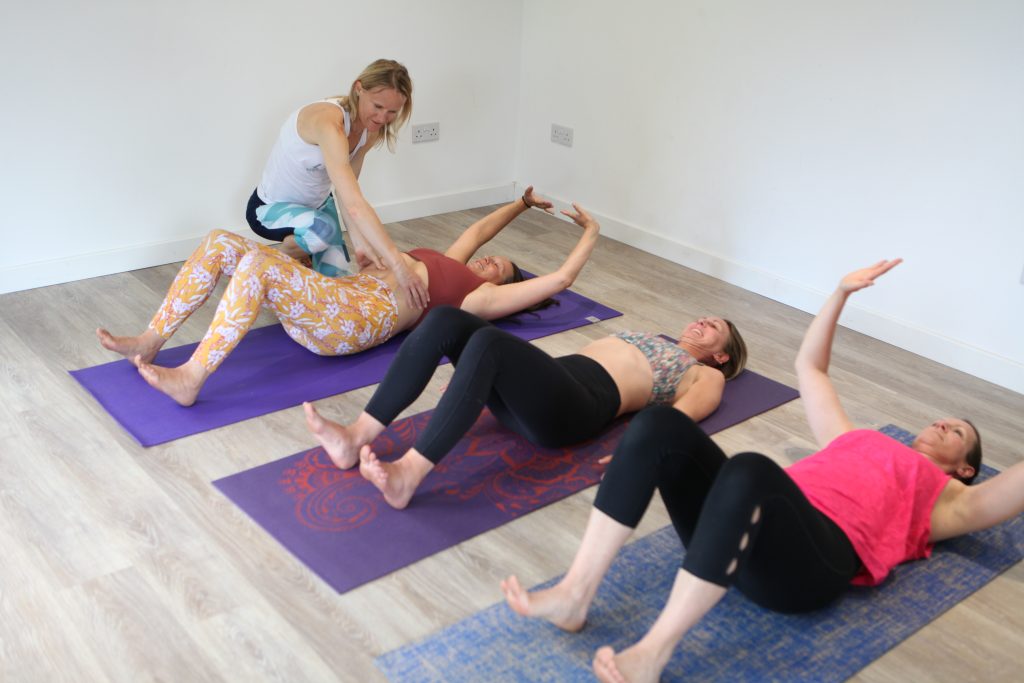
Recently, Alison explained the physiology behind the menopause post-lunch slump and how declining hormones change our stress responses. Today, I want to look at another vital system heavily impacted by menopause and stress – your pelvic floor.
As a Master Trainer for the International Hypopressives Council – UK, I want to change how you view your core and pelvic health.
What Are Hypopressives? They are not about squeezing harder! Traditional pelvic floor exercises often demand isolated tightening, like pulling a drawstring bag. Hypopressives take a completely different approach. They retrain your breath and posture so your entire body naturally supports your core, spine, and pelvic floor.
Instead of increasing downward pressure, this method helps your body manage internal pressure effectively. We use 360-degree lateral breathing combined with precise postural alignment and a specific rib stretch – the expiratory apnoea. This creates the optimal environment for your organs to lift and your diaphragm to move freely. It re-educates your body to restore a reflexive pelvic naturally, without force, strain, or endless Kegels!
Your Pelvic Floor Is Not Isolated This is the crucial piece of information I share with all my clients. Your pelvic floor does not exist in isolation. It responds dynamically to your ribs, diaphragm, jaw, feet, spine, nervous system and your feet!
When women reach perimenopause or menopause and experience leaking, heaviness, pelvic tension, or loss of confidence, they are often told their pelvic floor is simply “weak”. This is rarely the full picture. Sometimes the pelvic floor is tight, exhausted, or guarding. Sometimes it is overworking because other parts of your body have stopped sharing the load.
Creating Space, Not Pressure This is why Hypopressives are so effective during this stage of life. They help your body reorganise. They work with your breathing, rib expansion, and abdominal wall as one connected system to create space and better coordination.
Women in midlife have often spent years bracing, gripping, holding their breath, and carrying stress in their bodies. You do not need to be told to apply more pressure or to simply try harder. You need informed support. You need to feel how your breath lands and how your pelvic floor can function as an automatic, reflexive system rather than a muscle you must constantly police. When your body starts to feel connected again, your physical confidence naturally follows.
LinkedIn Post Executive women often spend their days bracing against stress, holding their breath, and carrying tension. During menopause, this constant physical gripping takes a toll on your pelvic health.
If you are experiencing pelvic heaviness or tension, the standard advice is often to do more Kegels. But your pelvic floor does not exist in isolation. It is directly linked to your diaphragm, your posture, and your nervous system. Often, your pelvic floor is not ‘weak’ – it is exhausted, tight, and overworking.
Hypopressives offer a different approach. We use 360-degree lateral breathing and specific postures to manage internal pressure. Instead of squeezing harder, we create space. We help your body reorganise so your core and pelvic floor become a reflexive system again. You do not need more pressure; you need intelligent support.
#ExecutiveWellness #MenopauseAtWork #Hypopressives #WomensHealth #pillarpointmenopausecoaching