
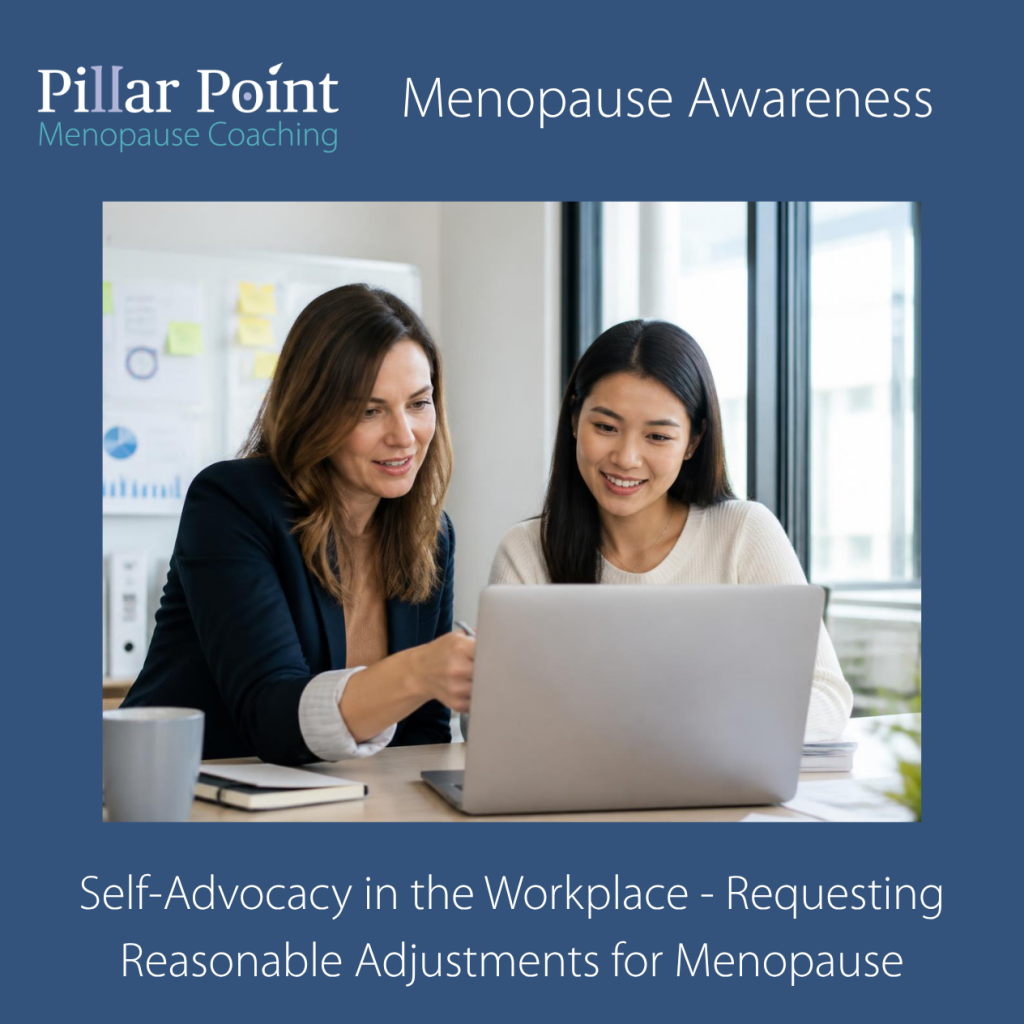
Navigating menopause in the workplace can feel like a delicate balancing act. Symptoms such as severe hot flushes, fatigue, and brain fog can disrupt your daily performance, yet the prospect of discussing personal health matters with a line manager often feels daunting.
However, communicating your health needs professionally is not a sign of weakness—it is a strategic career move. By self-advocating and requesting reasonable adjustments, you take control of your environment, allowing you to maintain your productivity, protect your wellbeing, and confidently continue your career trajectory.
Approaching the Conversation The key to a successful discussion with HR or your line manager is to frame it as a business conversation. You are identifying a barrier to your optimal performance and proposing a workable solution.
- Prepare Your Case: Document how specific symptoms impact your daily tasks. Keep this factual and objective.
- Focus on Solutions: Do not just list the problems; come to the table with concrete, reasonable adjustments you would like to implement.
- Know Your Rights: In the UK, menopause symptoms can be classified under the Equality Act 2010 if they have a long-term and substantial impact on your daily life. Employers have a legal duty to make reasonable adjustments.
Examples of Reasonable Adjustments Adjustments do not have to be expensive or highly disruptive to be effective. Small changes often make the biggest difference.
| Menopause Symptom | Workplace Impact | Proposed Reasonable Adjustment |
| Severe Hot Flushes | Discomfort during meetings, loss of focus | Desk fan, moving near a window, or breathable uniform modifications |
| Insomnia / Fatigue | Difficulty concentrating during early hours | Shifted core hours (e.g., 10 AM to 6 PM) or hybrid working options |
| Brain Fog | Struggling to retain verbal information | Requesting meeting agendas in advance and written follow-up notes |
Self-advocacy is a leadership skill. By stepping forward and asking for the environment you need to thrive, you not only protect your own career but also pave the way for a more inclusive, supportive culture for the women following behind you.