
Oestrogen is a powerful, natural anti-inflammatory agent. When oestrogen levels drop during perimenopause and post-menopause, women frequently experience a spike in systemic inflammation. This is why joint pain often appears suddenly during this life stage, and why vascular health requires closer attention.
Adopting an anti-inflammatory diet provides a practical way to manage this internal shift. By changing what you eat, you can actively reduce inflammation, ease joint stiffness, and protect your cardiovascular system.
Managing Joint Pain Through Diet Joint pain during menopause is often driven by inflammation rather than simple wear and tear. You can counter this through specific dietary additions.
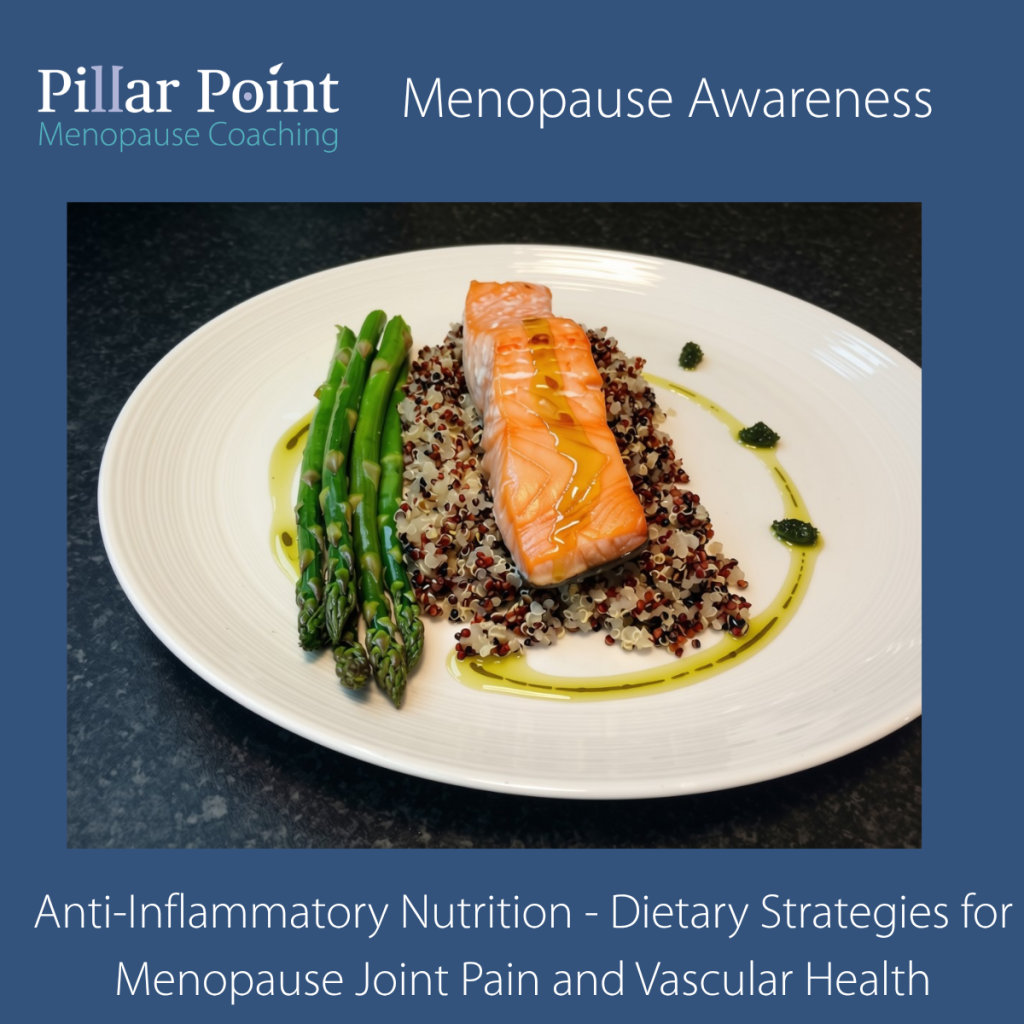
- Omega-3 Fatty Acids: Found in oily fish like salmon and mackerel, omega-3s reduce the production of inflammatory molecules. Aim for two to three portions a week.
- Antioxidant-Rich Vegetables: Dark leafy greens and brightly coloured vegetables contain compounds that neutralise free radicals. Free radicals drive inflammation in the joints.
- Limit Processed Sugars: High blood sugar levels trigger the release of inflammatory cytokines. Reducing refined carbohydrates directly eases joint stiffness.
Protecting Vascular Health The decline in oestrogen also reduces the elasticity of blood vessels. This increases the risk of cardiovascular issues. An anti-inflammatory approach can help with the frontline defence for your heart.
- Extra Virgin Olive Oil: This contains oleocanthal, a compound that works in a similar way to ibuprofen to reduce inflammation in the vascular system.
- Berries and Polyphenols: Blueberries, blackberries, and raspberries are high in polyphenols. These plant compounds improve the function of the endothelium – the inner lining of your blood vessels.
- Whole Grains over Refined: Oats, quinoa, and brown rice provide dietary fibre. Fibre helps clear excess cholesterol and reduces systemic inflammation.
Your diet is a daily opportunity to give your body the tools it needs to handle the menopausal transition. Small, consistent changes to your meals will yield significant improvements in how your joints feel and how your heart functions.