
Modern work culture is fast, mobile, and often relentless. Whether you’re navigating airport lounges, hotel rooms, or back‑to‑back meetings, maintaining a consistent movement routine can feel impossible. Yet this is exactly when the body needs structured strength and mindful mobility the most.
Functional strength and Pilates offer a powerful combination for people with demanding schedules: efficient, equipment‑light, and deeply restorative. With the right strategy, both can be woven seamlessly into travel days, corporate routines, and hybrid work patterns.
Only perform these exercises if you are fit and well with no underlying health conditions or injuries that could be aggravated by exercise and you understand the Pilates Method:- Centering, Breath, Concentration, Control, Precision and Flow. Always performing an inhale followed by the exhale to move. Use a cushion or pillow under you head if excessive curvature of the upper spine is present, to aid in connecting the abdominals with the spinal alignment (with the exception of shoulder bridge when no pillow should be used).
Why Functional Strength and Pilates Works for Busy Professionals
Functional strength focuses on movements that support real‑life tasks: lifting, bending, stepping, stabilising. It builds resilience in the muscles and connective tissues that keep you upright, balanced, and injury‑free.
Pilates complements this by improving alignment, breath mechanics, core control, and mobility. Together they create a system that:
- Reduces stiffness from flights, long drives, or desk work
- Supports posture during long meetings or presentations
- Improves energy, focus, and stress regulation
- Maintains strength without needing a gym
- Prevents the common travel‑related issues: tight hips, sore lower back, neck tension, disrupted sleep
This combination is efficient, adaptable, and ideal for people who need results without long workouts.
How to Build a Travel‑Friendly Routine
1. Use the “10‑Minute Rule”
If time is tight, consistency matters more than duration. Ten minutes of targeted movement can reset posture, reduce pain, and activate key muscle groups.
A simple 10‑minute travel sequence might include:
- Shoulder release by rolling the shoulders towards the ears and back 8 times in each direction
- Neck and jaw release by relaxing the jaw and nodding the head slowly before turning the head from side to side again slowly and gently. Finally take an ear towards the shoulder alternating from side to side
- Knee to chest either standing or laying down, keep the straight leg straight stretching through the front of the hip whilst gently bringing the bent leg towards your chest
- Standing roll‑downs, imagine rolling your body over a small wall, feeling the stretch through your back, roll as far as your legs and back allows.
- Dead bug, (lie on your back, utilising the breath and abdominals float one leg into table top, then the 2nd leg., alternately tap the toes to the floor, keeping the 90° angle at the hip), for strength.
- Bridge, articulating through the spine as you lift and lower, engaging the glutes, hamstrings and abdominal muscles
- Thoracic rotation and extension
These movements require no equipment and can be done in a hotel room or even a quiet airport lounge.
2. Anchor Your Practice to Existing Habits
Busy schedules thrive on habit. Associate your movement with something you already do:
- After waking up in a hotel: 5 minutes of mobility
- Before a meeting: posture reset
- After a flight: hip flexor release and thoracic extension
- Before bed: breathing, relaxation and gentle spinal mobility
Anchoring removes decision fatigue and keeps your routine automatic.
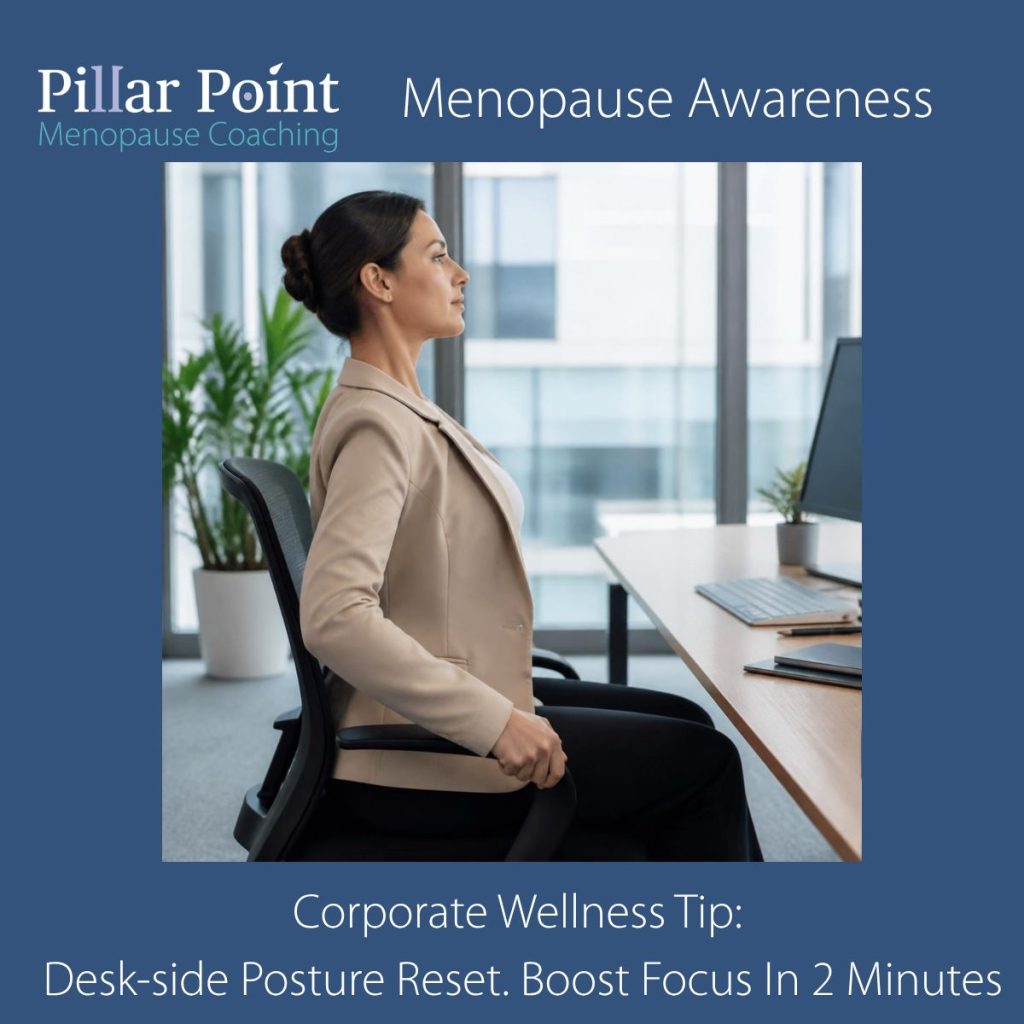
3. Prioritise Posture Resetting
Travel and corporate work create unstable postural patterns: forward head position, rounded shoulders, tight hip flexors and “sleepy” glutes.
A daily posture reset helps counteract this:
Posture Reset Sequence
- Stand tall with head in line with the spine
- Soft knees: Lengthened legs but without locking the knees
- Hips over heels,
- Ribcage over pelvis, with the ribs drawn in and down
- Shoulders open, lift the breastbone without arching the lower back
- Breathe wide into the middle of the ribcage
- If sitting, sit tall on the sit bones.
This takes less than a minute and can be done anywhere.
4. Pack One Lightweight Tool
If you want to elevate your routine, choose one portable item:
- Pilates ball (deflated, don’t forget the straw!)
- Resistance band
- Mini loop
- Travel yoga mat
These add variety without adding bulk to your luggage. But you can use items you have in your room and suitcase, a long scarf or pair of tights as a resistant band, a cushion instead of a Pilates ball, bottles of water as weights.
Integrating Movement into Corporate Days
Micro‑Sessions Throughout the Workday
Instead of one long workout, break your exercise movement into small bursts:
- 2 minutes of thoracic mobility between calls
- 5 minutes of glute activation before lunch
- Standing alignment reset before presenting
- Breathing drills to regulate stress before difficult meetings
These micro‑sessions keep the nervous system calm and the body mobile.
Desk‑Friendly Strength & Mobility
You can build functional strength without leaving your desk:
- Seated pelvic tilts
- Scapular retraction (lift the shoulders to your ears, open the chest and slide the shoulder blades down your back).
- Isometric glute squeezes (as you exhale squeeze the glute muscles and hold for 2 breaths then slowly release to relaxed position)
- Foot doming (Place the feet flat on the floor and bring the toes towards the heels (keeping the toes flat) the arches should lift and strengthen).
- Neck lengthening
- Seated spinal rotation
These maintain circulation and reduce stiffness.
End‑of‑Day Decompression
Corporate days often end with elevated cortisol and tight shoulders. A short decompression routine helps transition out of “work mode”:
- Child’s pose (breathe into the ribcage and release all tension so the breath travels down the spine to the pelvis)
- Hip rolls (use breath to move the legs from side to side)
- Gentle twist eg. Bow and Arrow (lie on the side, open the chest and allow the spine to twist) relaxing and breathing into the movement
This supports sleep, recovery, and long‑term wellbeing.
The Takeaway
Functional strength and Pilates are not just exercise methods. They’re tools for balancing mental and physical of corporate life. When integrated into travel or corporate schedules, they:
- Protect posture
- Reduce pain
- Improve focus
- Support long‑term health
- Fit into even the busiest lifestyle
Movement doesn’t need to be complicated. It needs to be consistent, intentional, and aligned with how your body works.
#MenopauseFitness #WomensHealth #CoreStrength #PilatesForLife #CorporateWellness #MenopauseaAtWork #PillarPointMenopauseCoaching